
The fusion of human cognition and advanced technology has opened unprecedented avenues for interaction, transforming how we engage with digital environments. Perceptual feedback systems represent a paradigm shift in interface design, bridging the gap between intention and execution.

In an era where digital experiences dominate our daily routines, the quality of interaction determines success across industries. From healthcare to gaming, education to industrial design, perceptual feedback systems are revolutionizing how humans connect with machines. These sophisticated frameworks interpret sensory input, process contextual data, and deliver responsive output that feels intuitive and natural. Understanding and mastering these systems isn’t merely a technical advantage—it’s becoming essential for anyone working at the intersection of technology and human experience.
🎯 The Foundation of Perceptual Feedback Systems
Perceptual feedback systems operate on a fundamental principle: creating a seamless loop between user action and system response. Unlike traditional interfaces that rely solely on visual or auditory cues, cutting-edge systems integrate multiple sensory channels simultaneously. This multisensory approach aligns with how humans naturally perceive and interact with the physical world.
The architecture of these systems comprises three essential components: input sensors that capture user actions, processing algorithms that interpret intent, and output mechanisms that deliver meaningful feedback. What distinguishes modern systems is their ability to process information in real-time, adapting responses based on contextual awareness and learned patterns.
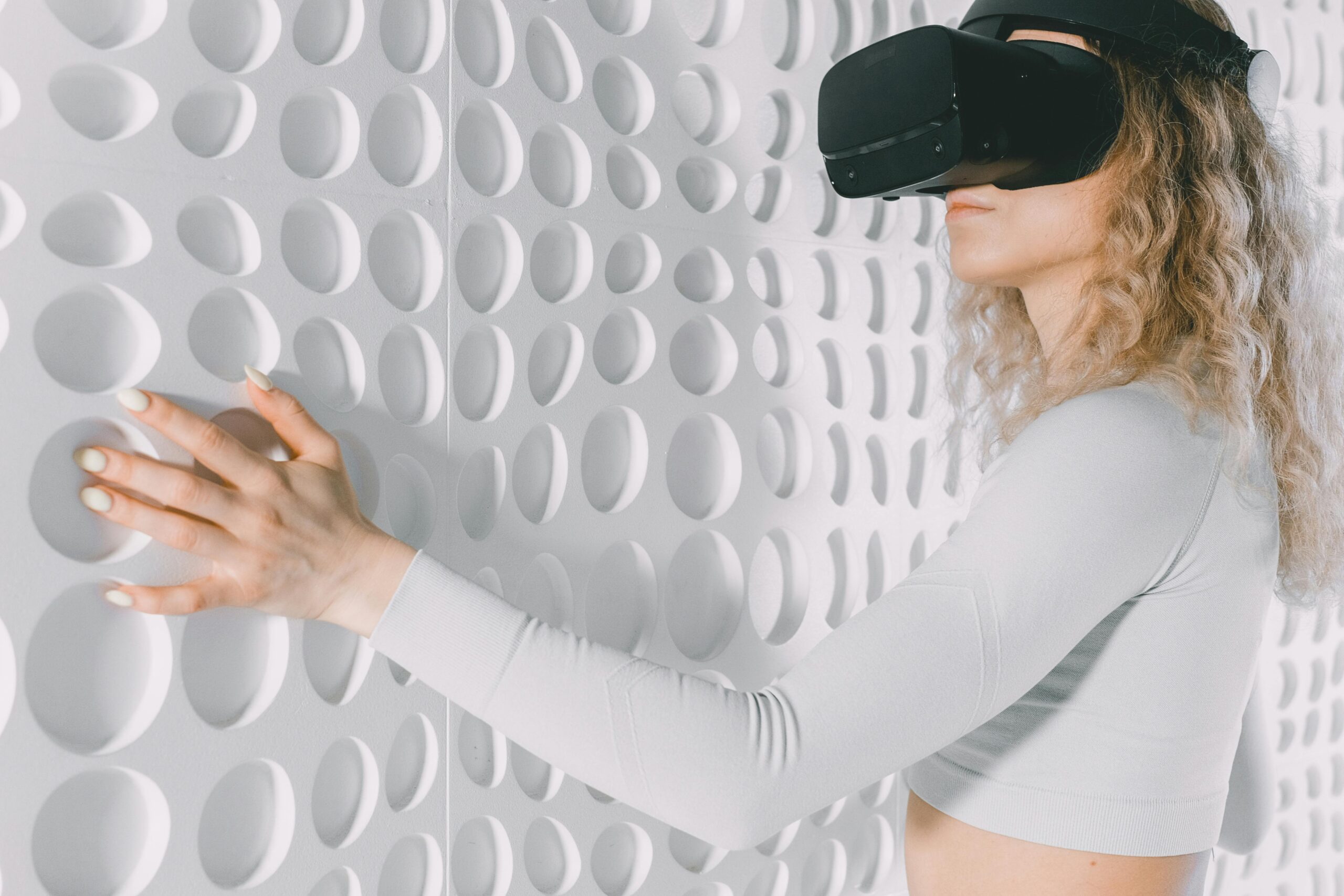
Haptic technology has emerged as a cornerstone of advanced perceptual feedback. By simulating touch sensations through vibrations, forces, and motions, haptic interfaces create tangible connections in digital spaces. Surgeons practicing on virtual patients feel tissue resistance, gamers experience terrain variations, and designers manipulate three-dimensional models with realistic touch feedback.
Sensory Integration and Cross-Modal Processing
The human brain excels at integrating information from multiple senses simultaneously. Cutting-edge perceptual systems replicate this capability through cross-modal processing. When visual, auditory, and tactile feedback align perfectly, users experience what researchers call “presence”—the sensation of genuinely inhabiting a digital environment.
This integration extends beyond simple synchronization. Advanced systems create synesthetic experiences where information presented through one sensory channel enhances perception in another. Audio cues can sharpen visual focus, while haptic feedback can improve spatial understanding in virtual environments.
🚀 Revolutionary Applications Across Industries
Healthcare professionals are leveraging perceptual feedback systems to achieve outcomes previously impossible. Surgical training platforms now provide residents with realistic tactile feedback, enabling them to develop fine motor skills without risking patient safety. Rehabilitation programs use adaptive feedback to guide patients through recovery exercises, adjusting difficulty in real-time based on performance metrics.
Prosthetic limbs equipped with advanced sensory feedback systems are restoring not just functionality but sensation. Users report feeling textures, temperatures, and pressures through artificial limbs, dramatically improving quality of life and device adoption rates. These breakthroughs demonstrate how perceptual feedback transcends mere functionality to restore fundamental human experiences.
Educational Transformation Through Immersive Learning
Education has discovered that perceptual feedback systems dramatically enhance retention and understanding. Complex scientific concepts become tangible when students can manipulate molecular structures with haptic feedback, feeling atomic bonds and electromagnetic forces. Historical events gain new dimension when immersive environments combine visual reconstruction with period-appropriate soundscapes and environmental effects.
Language learning applications now incorporate pronunciation feedback that goes beyond simple audio matching. Sophisticated systems analyze vocal tract positioning, breath control, and articulation patterns, providing learners with precise guidance on achieving native-like pronunciation. This granular feedback accelerates acquisition and builds confidence.
💡 Technical Innovations Driving the Evolution
Machine learning algorithms have become indispensable for creating adaptive perceptual feedback systems. These algorithms analyze user behavior patterns, identifying preferences and predicting needs before conscious awareness. A well-designed system learns individual interaction styles, customizing feedback intensity, timing, and modality to match personal preferences.
Sensor technology advancements have miniaturized components while exponentially increasing sensitivity and precision. Modern systems detect micro-movements, subtle pressure variations, and minute environmental changes. Eye-tracking technology now operates with millisecond accuracy, enabling systems to predict focus shifts and preemptively adjust interface elements.
The Role of Low-Latency Processing
Latency remains the critical challenge in perceptual feedback systems. Human perception operates within strict temporal windows—delays exceeding 20 milliseconds between action and feedback disrupt the sense of direct manipulation. Cutting-edge systems employ edge computing, processing data locally rather than relying on cloud infrastructure, ensuring instantaneous responses.
5G networks and next-generation wireless protocols are expanding possibilities for mobile perceptual feedback applications. Reduced latency enables sophisticated feedback systems to operate on portable devices, untethered from stationary computing infrastructure. This mobility opens applications in field medicine, remote maintenance, and augmented reality navigation.
🎮 Gaming and Entertainment: The Testing Ground
The gaming industry has historically pioneered perceptual feedback innovations, pushing technological boundaries before concepts migrate to other sectors. Contemporary gaming controllers feature adaptive triggers that simulate weapon recoil, vehicle acceleration resistance, and tool operation characteristics. These subtle tactile cues dramatically enhance immersion without requiring conscious attention.
Virtual reality gaming has evolved beyond visual and auditory immersion to incorporate full-body haptic suits. Players feel impacts, environmental conditions, and even directional wind within game environments. These experiences aren’t merely entertaining—they’re training grounds for spatial cognition skills and coordination development.
Competitive gaming has embraced perceptual feedback as a performance enhancement tool. Professional players utilize customized feedback profiles that highlight strategic information through subtle sensory cues. This approach reduces cognitive load, allowing faster decision-making during high-pressure competition.
🏭 Industrial Applications and Workforce Development
Manufacturing and industrial sectors are deploying perceptual feedback systems for training and operational efficiency. Equipment operators learn complex machinery operation in risk-free virtual environments that replicate genuine operational feedback. This approach reduces training time, minimizes equipment damage, and improves safety outcomes.
Remote operation of industrial robots and heavy machinery now incorporates sophisticated feedback systems. Operators feel resistance when approaching operational limits, receive haptic warnings about potential collisions, and experience tactile confirmation of successful task completion. This sensory augmentation enables precise control despite physical distance from equipment.
Quality Control and Precision Tasks
Industries requiring extreme precision—semiconductor manufacturing, pharmaceutical production, aerospace assembly—are integrating perceptual feedback into quality control processes. Inspectors receive augmented visual feedback highlighting defects, while haptic gloves provide resistance guidance during delicate assembly procedures. These systems reduce errors and accelerate training for specialized tasks.
🧠 Cognitive Science Insights Shaping Design
Effective perceptual feedback systems are grounded in cognitive science research. Understanding attention mechanisms, memory formation, and sensory processing enables designers to create interfaces that align with natural cognitive processes rather than fighting against them.
The concept of “affordances”—perceived action possibilities within environments—guides modern interface design. Well-designed perceptual feedback makes interaction possibilities immediately obvious through sensory cues. Users instinctively understand how to manipulate interface elements because feedback patterns match expectations established through lifetime experiences with physical objects.
Cognitive load management is crucial for effective perceptual feedback. Systems must provide sufficient information for task completion without overwhelming sensory channels. Research has identified optimal feedback intensities and frequencies for different task types, enabling designers to calibrate systems for maximum effectiveness.
🌐 Accessibility and Inclusive Design Principles
Perceptual feedback systems offer transformative potential for accessibility. Individuals with visual impairments navigate digital environments through sophisticated audio and haptic feedback. Spatial audio cues indicate interface element positions, while haptic patterns convey information structure and content types.
Motor impairment accommodations include adaptive input sensitivity, predictive interface adjustments, and multimodal interaction options. Systems learn individual movement patterns and capabilities, automatically adjusting feedback and input requirements to match user abilities.
Cognitive accessibility benefits from perceptual feedback through reduced complexity and intuitive interaction patterns. Well-designed systems minimize required abstract thinking, replacing it with direct manipulation that feels natural and requires less conscious processing.
⚙️ Implementation Challenges and Solutions
Despite impressive capabilities, perceptual feedback systems face implementation challenges. Hardware costs remain significant, particularly for sophisticated haptic devices. However, economies of scale and manufacturing innovations are steadily reducing prices, making advanced systems accessible beyond research laboratories and premium applications.
Standardization challenges complicate development. Unlike visual interfaces with established design patterns, perceptual feedback lacks universal conventions. Developers must balance innovation with user expectations, creating novel experiences that remain intuitively understandable.
Balancing Realism and Functionality
Designers face the paradox that perfect realism isn’t always optimal. Exaggerated feedback often communicates information more effectively than physically accurate simulation. Finding the right balance requires iterative testing and user feedback, adjusting parameters until the system feels “right” rather than merely accurate.
🔮 Future Trajectories and Emerging Possibilities
Brain-computer interfaces represent the next frontier for perceptual feedback. Early systems already enable direct neural stimulation, bypassing traditional sensory organs entirely. These technologies promise profound implications for accessibility, entertainment, and cognitive enhancement.
Artificial intelligence integration will enable perceptual feedback systems to anticipate needs with uncanny accuracy. Predictive models will adjust feedback preemptively, creating experiences that feel responsive to thoughts rather than actions. This seamless integration may fundamentally alter human-computer relationships.
Bioresponsive feedback systems that monitor physiological states—heart rate, stress hormones, cognitive load—will dynamically adjust interfaces to maintain optimal user states. Gaming experiences might adapt difficulty based on measured stress, while educational systems could pace information delivery according to comprehension indicators.
🎯 Practical Strategies for Mastery
Mastering perceptual feedback systems requires both theoretical knowledge and hands-on experience. Developers should prioritize prototyping and user testing early in design processes. Iterative refinement based on actual user interactions reveals insights impossible to predict through theoretical analysis alone.
Cross-disciplinary collaboration enhances system quality. Teams combining engineers, cognitive scientists, designers, and domain experts create more effective solutions than any single discipline working independently. Each perspective contributes essential insights that improve overall system performance.
Continuous learning remains essential as the field evolves rapidly. Emerging research regularly challenges established assumptions and introduces new possibilities. Staying current with scientific literature, attending conferences, and participating in professional communities ensures practitioners maintain cutting-edge capabilities.
🌟 The Human-Centered Approach to Innovation
The most successful perceptual feedback systems maintain unwavering focus on human needs and capabilities. Technology serves as a tool for enhancing human potential rather than an end unto itself. This philosophy ensures innovations remain grounded in genuine utility rather than technological showmanship.
Ethical considerations must guide development. Perceptual feedback systems possess significant influence over user experience and behavior. Designers bear responsibility for creating systems that respect autonomy, protect privacy, and enhance wellbeing rather than exploiting psychological vulnerabilities.
The ultimate measure of success isn’t technical sophistication but human impact. Systems that empower users, expand capabilities, and enrich experiences justify the considerable effort required for development. As perceptual feedback technology matures, its potential to fundamentally improve human-technology interaction continues expanding, promising a future where digital experiences feel as natural and intuitive as physical reality itself.
The journey toward mastering perceptual feedback systems combines technical excellence with deep human understanding. Those who succeed in this synthesis will shape how future generations interact with technology, unlocking human potential in ways we’re only beginning to imagine. The convergence of advanced sensors, intelligent algorithms, and cognitive science insights creates unprecedented opportunities for innovation—opportunities that demand both technical skill and humanistic vision to fully realize.