The intersection of consciousness and quantum physics represents one of the most fascinating frontiers in modern science, challenging our fundamental understanding of reality itself.

For decades, physicists and neuroscientists have grappled with questions that seem to dance at the edges of human comprehension. How does consciousness emerge from matter? Can the strange rules governing the quantum world explain the mysteries of the mind? These questions are no longer confined to philosophical speculation—they’re driving revolutionary research that could transform our understanding of what it means to be conscious, sentient beings in a quantum universe.
🧠 The Quantum Consciousness Hypothesis: Where Science Meets Mind
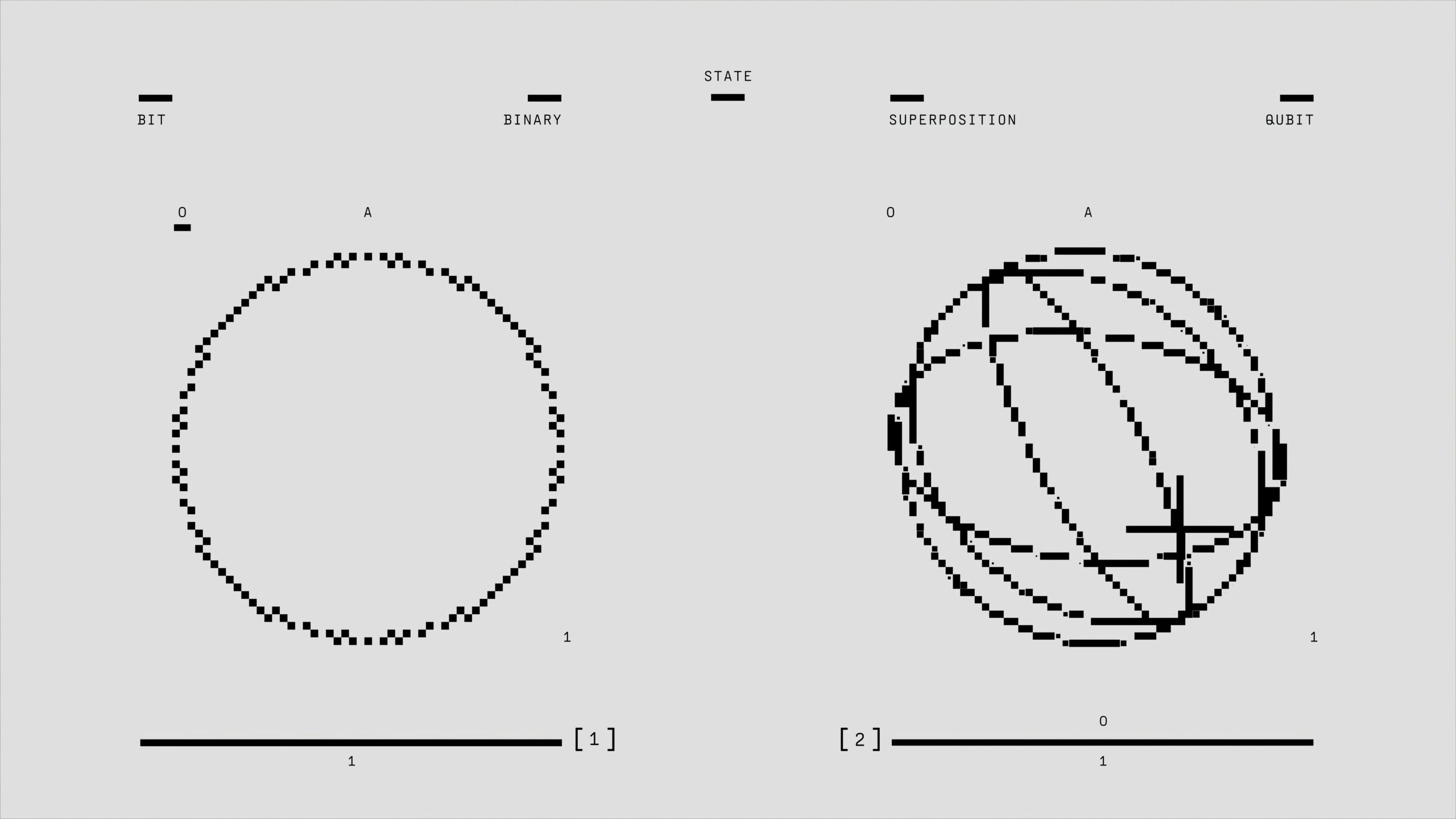
The quantum mind hypothesis proposes that quantum mechanical phenomena, such as superposition and entanglement, play a fundamental role in cognitive function and consciousness. This controversial idea suggests that the brain isn’t merely a classical computer processing information through electrical signals, but rather a quantum system capable of exploiting the peculiar properties of the subatomic world.
Traditional neuroscience views the brain as a complex network of neurons communicating through electrochemical signals. While this model has proven remarkably successful in mapping brain functions, it struggles to explain the unified, subjective experience we call consciousness. The “hard problem of consciousness,” as philosopher David Chalmers termed it, remains stubbornly resistant to conventional scientific approaches.
Quantum theories of consciousness offer a radically different perspective. They suggest that quantum effects occurring at the neuronal or sub-neuronal level might provide the missing link between objective brain processes and subjective conscious experience. This approach doesn’t dismiss classical neuroscience but rather proposes an additional layer of explanation rooted in quantum mechanics.
The Orchestrated Objective Reduction Theory: Penrose and Hameroff’s Bold Vision
Perhaps the most well-known quantum consciousness theory comes from mathematical physicist Sir Roger Penrose and anesthesiologist Stuart Hameroff. Their Orchestrated Objective Reduction (Orch-OR) theory proposes that consciousness arises from quantum computations in microtubules, protein structures found within neurons.
Microtubules are cylindrical structures that form part of the cell’s cytoskeleton. Penrose and Hameroff suggest these structures could maintain quantum coherence long enough to perform quantum computations that give rise to conscious experience. According to their theory, conscious moments occur when quantum superpositions in microtubules collapse through a process they call “objective reduction.”
Key Components of the Orch-OR Theory
- Quantum superposition in microtubules: Multiple possible states exist simultaneously at the quantum level within these cellular structures
- Quantum coherence: The ability of quantum states to maintain their delicate relationships despite the warm, wet environment of the brain
- Objective reduction: A threshold-based collapse of quantum states influenced by spacetime geometry
- Orchestration: Biological processes that organize and tune quantum computations toward conscious experience
Critics have long argued that the brain is too warm and noisy for quantum effects to persist long enough to influence neural processing. However, recent discoveries in quantum biology have challenged this assumption, showing that quantum phenomena can indeed occur in biological systems at physiological temperatures.
🔬 Quantum Biology: Evidence That Nature Plays by Quantum Rules
The emergence of quantum biology as a legitimate scientific field has provided crucial support for quantum consciousness theories. Researchers have discovered quantum effects in photosynthesis, bird navigation, enzyme catalysis, and even DNA mutation processes. These findings demonstrate that nature has evolved mechanisms to harness and protect quantum phenomena in warm, complex biological environments.
Photosynthetic organisms achieve near-perfect energy transfer efficiency through quantum coherence, a discovery that shocked the scientific community when first reported in 2007. If plants can maintain quantum coherence in their light-harvesting complexes, perhaps the brain can do something similar in its information processing systems.
European robins and other migratory birds appear to use quantum entanglement in specialized proteins in their eyes to detect Earth’s magnetic field for navigation. This quantum compass operates at body temperature, further evidence that quantum effects aren’t necessarily fragile in biological contexts.
The Quantum Brain Dynamics Approach: Field Theories of Consciousness
Another prominent approach comes from quantum field theory applications to neuroscience. Pioneered by researchers like Mari Jibu, Kunio Yasue, and Giuseppe Vitiello, Quantum Brain Dynamics (QBD) treats consciousness as an emergent property of quantum fields in the brain’s water molecules and other cellular components.
This theory proposes that the brain’s electromagnetic field, generated by synchronized neural activity, creates conditions for quantum coherent states extending across large brain regions. These coherent states could provide the unity of conscious experience—the binding of disparate sensory inputs into a single, integrated perception of reality.
QBD suggests that memory storage occurs not just in synaptic connections but in the quantum field itself, potentially explaining the vast storage capacity of human memory and phenomena like pattern recognition and associative recall that seem to exceed what classical neural networks could achieve.
⚛️ Quantum Entanglement and Non-Local Consciousness
Quantum entanglement—Einstein’s “spooky action at a distance”—presents intriguing possibilities for understanding consciousness. When particles become entangled, measuring one instantly affects the other, regardless of the distance separating them. Some theorists speculate that entanglement might explain puzzling aspects of consciousness, including the unity of experience and possibly even phenomena like telepathy or collective consciousness.
While mainstream science remains skeptical of paranormal interpretations, the non-local nature of quantum entanglement does suggest that our classical, localized view of reality might be fundamentally incomplete. If consciousness has quantum aspects, it too might exhibit non-local properties that transcend our everyday intuitions about space and separation.
Potential Implications of Quantum Entanglement in Neuroscience
- Neural synchronization: Entanglement could provide a mechanism for instantaneous coordination across brain regions
- Information integration: Non-local correlations might bind distributed neural processes into unified conscious experiences
- Temporal binding: Quantum effects could explain how events separated in time become linked in conscious perception
- Inter-brain connections: Speculative theories propose entanglement between brains during social interaction
The Measurement Problem and Observer Effect: Does Consciousness Collapse the Wave Function?
At the heart of quantum mechanics lies a profound mystery: the measurement problem. Quantum systems exist in superposition—multiple states simultaneously—until measured, at which point the wave function collapses into a definite state. But what constitutes a “measurement”? Does it require a conscious observer?
Some interpretations of quantum mechanics, particularly those associated with physicists like John von Neumann and Eugene Wigner, suggest that consciousness plays a fundamental role in collapsing quantum superpositions. This perspective inverts the usual scientific approach: rather than explaining consciousness through physical processes, it makes consciousness essential to physical reality itself.
The participatory universe concept, championed by physicist John Archibald Wheeler, takes this idea further, proposing that observer participation is essential to bringing the universe into existence. In this view, consciousness isn’t a late-arriving accident in cosmic evolution but a fundamental feature woven into the fabric of reality from the beginning.
🌌 Integrated Information Theory Meets Quantum Mechanics
Giulio Tononi’s Integrated Information Theory (IIT) provides a mathematical framework for measuring consciousness based on the integrated information a system generates. While originally formulated in classical terms, some researchers are exploring quantum versions of IIT that could incorporate quantum information theory.
IIT proposes that consciousness corresponds to integrated information, symbolized by the Greek letter Phi (Φ). Any system with sufficiently high Φ possesses some degree of consciousness. Quantum extensions of this theory suggest that quantum entanglement and superposition could dramatically increase a system’s integrated information, potentially explaining the richness of conscious experience.
This approach offers a bridge between purely physical descriptions and subjective experience, providing testable predictions about which systems should be conscious and to what degree. Quantum IIT could potentially explain why certain brain states produce rich conscious experiences while others, despite similar levels of classical neural activity, don’t.
Experimental Approaches: Testing Quantum Consciousness Theories
Moving quantum consciousness from speculation to science requires experimental validation. Several research groups worldwide are developing approaches to test these theories, though the challenges are formidable.
One promising avenue involves detecting quantum coherence in neural microtubules using advanced spectroscopic techniques. Researchers at University of California, Santa Barbara, and other institutions are adapting methods from quantum computing to probe whether quantum effects exist in brain tissue under physiological conditions.
Another approach examines whether anesthetics work by disrupting quantum processes. If consciousness depends on quantum coherence in microtubules, anesthetics might function by interfering with these quantum states. Some evidence suggests that anesthetic molecules bind to microtubules and could disrupt quantum processing, though this remains controversial.
Current Experimental Frontiers
| Research Area | Method | Goal |
|---|---|---|
| Quantum coherence detection | Ultrafast spectroscopy | Identify quantum effects in neural tissues |
| Anesthetic mechanisms | Molecular binding studies | Link consciousness to quantum processes |
| Neural correlates | Advanced neuroimaging | Map quantum-relevant brain states |
| Information integration | Quantum information theory | Measure quantum contributions to consciousness |
💭 Philosophical Implications: Rethinking Reality and Self
If quantum consciousness theories prove correct, the implications extend far beyond neuroscience. They would fundamentally alter our understanding of the relationship between mind and matter, challenging the materialist worldview that has dominated science since the Enlightenment.
The concept of free will takes on new dimensions in a quantum framework. If quantum indeterminacy plays a role in neural processing, it could provide the opening deterministic physics seems to close. Rather than a clockwork universe where every event is predetermined, we might inhabit a reality where genuine novelty and choice emerge from quantum processes in our brains.
The nature of death and the persistence of consciousness become open questions if consciousness has quantum aspects. Some theorists speculate that quantum information, unlike classical information, might not be destroyed but rather transformed or dispersed. While highly speculative, these ideas connect ancient philosophical and spiritual traditions with cutting-edge physics.
Criticisms and Controversies: The Skeptical Perspective
Quantum consciousness theories face substantial criticism from both neuroscientists and physicists. Many argue that these theories invoke quantum mechanics unnecessarily, solving no problems that classical neuroscience can’t address while introducing unfalsifiable claims and mystical thinking.
The decoherence objection remains the strongest criticism. Quantum systems lose their quantum properties extremely rapidly when interacting with warm, complex environments—a process called decoherence. Critics calculate that decoherence times in the brain would be far too short (femtoseconds to picoseconds) for quantum effects to influence neural processing, which operates on millisecond timescales.
Some scientists worry that quantum consciousness theories appeal more to those seeking to reconcile science with spirituality than to genuine explanatory power. The risk of “quantum mysticism”—misusing quantum terminology to justify pseudoscientific beliefs—remains a legitimate concern that proponents must carefully navigate.
🚀 Future Directions: Where the Quantum Mind Revolution Leads
Whether or not current quantum consciousness theories prove correct, the questions they raise are driving innovative research across multiple disciplines. The intersection of quantum physics, neuroscience, and consciousness studies is generating new experimental techniques, theoretical frameworks, and philosophical insights.
Advances in quantum computing might provide both tools and conceptual frameworks for understanding potential quantum processes in the brain. As engineers develop methods to maintain quantum coherence in artificial systems, these techniques could be adapted to probe biological quantum effects.
Artificial intelligence research increasingly confronts questions about machine consciousness. If consciousness requires quantum processes, current AI systems—running on classical computers—might never achieve genuine awareness regardless of their sophistication. Alternatively, quantum computers might offer a path toward artificially conscious systems.
The coming decades will likely see more precise experiments capable of definitively testing whether quantum effects occur in neural processing and whether such effects matter for consciousness. Advanced neuroimaging, quantum sensing technologies, and theoretical refinements will move these debates from speculation toward resolution.
Bridging Ancient Wisdom and Modern Science
Interestingly, quantum consciousness theories resonate with contemplative traditions that have explored consciousness for millennia. Buddhist concepts of non-self and interconnectedness, Hindu notions of universal consciousness, and mystical traditions across cultures all seem to align more naturally with quantum perspectives than with classical materialism.
This convergence doesn’t prove these theories correct, but it suggests that different modes of inquiry—scientific and contemplative—might be mapping the same territory from different angles. Integrating first-person investigation of consciousness through meditation and introspection with third-person scientific measurement could yield insights neither approach achieves alone.
The quantum mind revolution, whether it succeeds in its current form or evolves into something different, represents humanity’s ongoing quest to understand our place in the cosmos. By bridging consciousness and quantum physics, we’re not just asking how the brain works, but probing the deepest questions about reality, experience, and what it means to be conscious beings in a quantum universe.
As research continues and technologies advance, we move closer to answers—or perhaps to better questions. The journey itself transforms our understanding, revealing that the universe is stranger, more interconnected, and more wonderful than our everyday intuitions suggest. The quantum mind revolution invites us to reconsider everything we thought we knew about consciousness, reality, and the mysterious relationship between them.