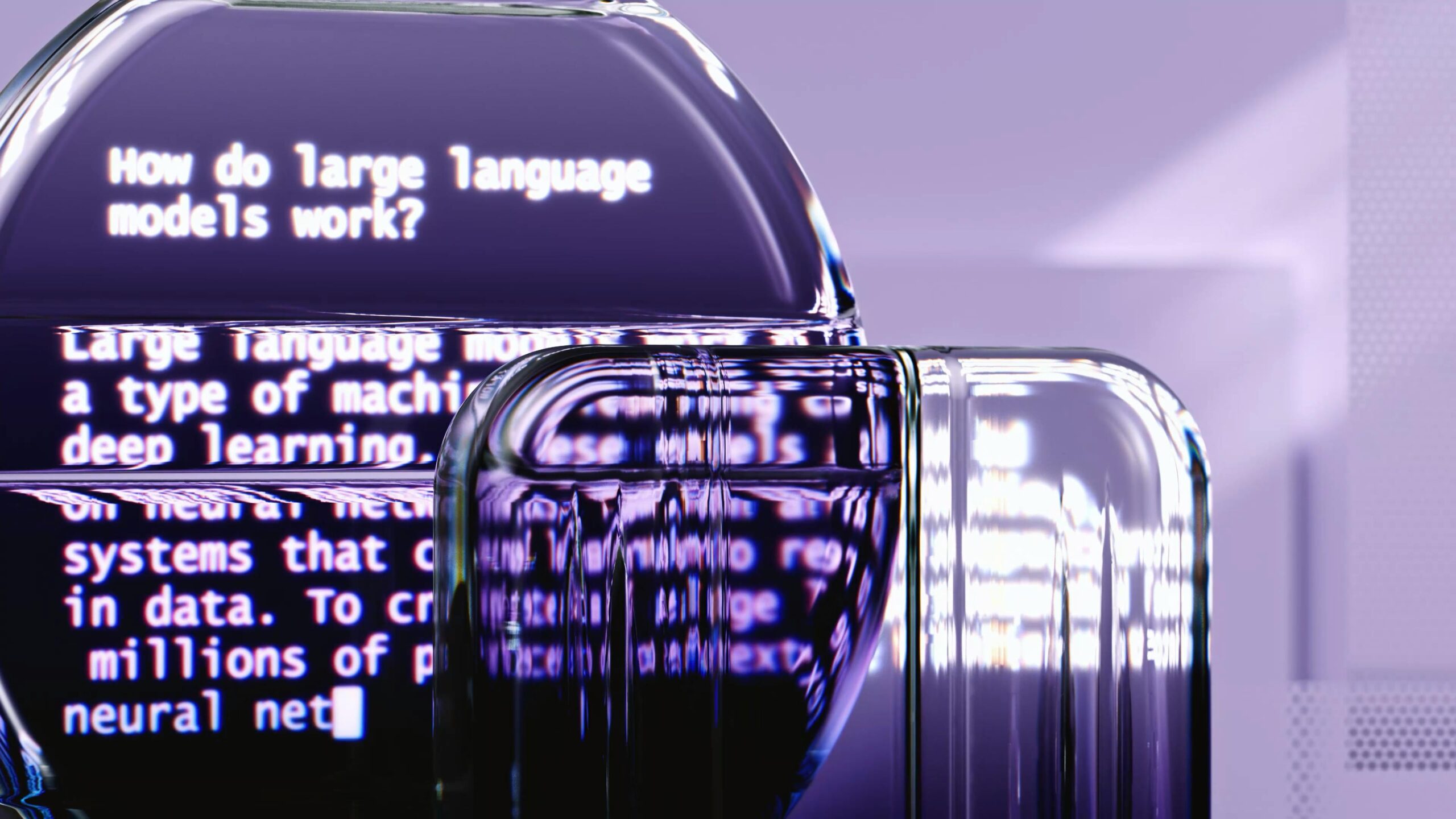
The convergence of quantum computing and artificial intelligence is reshaping our technological landscape in ways previously confined to science fiction. This revolutionary synthesis promises to unlock capabilities that transcend current computational limitations.

As we stand at the precipice of this transformative era, quantum-aware intelligence emerges as the bridge between theoretical possibilities and practical applications. Industries worldwide are beginning to recognize the profound implications of integrating quantum principles with intelligent systems, creating unprecedented opportunities for innovation across sectors ranging from healthcare to finance, cybersecurity to materials science.
🔬 Understanding Quantum-Aware Intelligence: A Paradigm Shift
Quantum-aware intelligence represents a fundamental departure from classical computing paradigms. Unlike traditional systems that process information in binary states, quantum-aware systems leverage superposition, entanglement, and quantum interference to process vast datasets simultaneously. This capability transforms how artificial intelligence algorithms approach complex problem-solving, enabling solutions to challenges that would require centuries using conventional methods.
The essence of quantum-aware intelligence lies in its ability to recognize and exploit quantum mechanical properties within computational frameworks. Machine learning algorithms designed with quantum principles in mind can identify patterns across multidimensional spaces that remain invisible to classical systems. This enhanced pattern recognition capability has profound implications for predictive modeling, optimization problems, and complex system simulations.
The Quantum Advantage in Processing Power
Traditional computing architectures face inherent limitations when scaling computational power. Moore’s Law, which predicted the doubling of transistors on integrated circuits approximately every two years, is approaching physical boundaries. Quantum computing circumvents these limitations by exploiting quantum bits, or qubits, which exist in multiple states simultaneously until measured.
This quantum advantage becomes exponentially significant as problems increase in complexity. While a classical computer with n bits can represent one of 2^n possible states at any given time, a quantum computer with n qubits can represent all 2^n states concurrently. For artificial intelligence applications requiring massive parallel processing, this difference translates into computational capabilities that fundamentally redefine what’s achievable.
🌐 Real-World Applications Transforming Industries
The theoretical promise of quantum-aware intelligence is rapidly materializing into tangible applications across diverse sectors. Organizations at the forefront of innovation are already implementing hybrid quantum-classical systems that demonstrate measurable advantages over purely classical approaches.
Healthcare Revolution Through Molecular Simulation
Pharmaceutical research stands to benefit enormously from quantum-aware intelligence. Drug discovery traditionally involves screening millions of molecular combinations to identify viable therapeutic candidates—a process that can take years and cost billions. Quantum-enabled AI systems can simulate molecular interactions at the quantum level, predicting how potential drug compounds will behave in biological systems with unprecedented accuracy.
This capability accelerates the identification of promising drug candidates while reducing the reliance on expensive and time-consuming laboratory trials. Researchers are already utilizing quantum-aware systems to model protein folding, understand genetic mutations, and design personalized treatment protocols based on individual patient genomics.
Financial Modeling and Risk Assessment
The financial sector grapples with extraordinary complexity when modeling market behaviors, assessing portfolio risks, or optimizing trading strategies. Quantum-aware intelligence systems excel at processing the multitude of variables that influence financial markets, identifying subtle correlations that escape traditional analytical methods.
Banks and investment firms are implementing quantum-inspired algorithms for portfolio optimization, fraud detection, and credit risk assessment. These systems analyze historical data, market sentiment, geopolitical factors, and economic indicators simultaneously, generating insights that inform more strategic decision-making and risk management.
Climate Science and Environmental Modeling
Understanding and predicting climate patterns requires processing astronomical amounts of data about atmospheric conditions, ocean currents, solar radiation, and countless other variables. Quantum-aware intelligence enables climate scientists to create more sophisticated models that account for the chaotic, nonlinear interactions within Earth’s climate system.
These enhanced models provide more accurate predictions about weather patterns, extreme climate events, and long-term climate trends. This improved forecasting capability is essential for developing effective mitigation strategies and preparing communities for climate-related challenges.
🚀 Breaking Through Current Technological Barriers
Despite its tremendous potential, quantum computing faces significant technical challenges that quantum-aware intelligence approaches are uniquely positioned to address. The integration of AI with quantum systems creates a symbiotic relationship where each technology compensates for the other’s limitations.
Quantum Error Correction and Noise Mitigation
Quantum systems are notoriously fragile, susceptible to decoherence and environmental noise that introduce errors into computations. Traditional error correction methods require substantial qubit overhead, limiting the practical utility of quantum computers. Quantum-aware AI systems can learn to recognize error patterns, predict decoherence events, and implement adaptive correction strategies that maintain computational integrity with fewer resources.
Machine learning algorithms trained on quantum error data develop sophisticated error mitigation techniques that improve as they process more quantum operations. This continuous improvement cycle enhances the reliability and scalability of quantum computing systems, accelerating their journey toward practical, large-scale implementation.
Optimizing Quantum Circuit Design
Designing efficient quantum circuits requires deep expertise in quantum mechanics and algorithm design. Quantum-aware intelligence systems can automate significant portions of this design process, exploring vast configuration spaces to identify optimal circuit architectures for specific computational tasks.
These AI-driven design tools lower barriers to entry for organizations seeking to leverage quantum computing without maintaining extensive specialized expertise in-house. By democratizing access to quantum circuit design, quantum-aware intelligence accelerates the adoption and application of quantum technologies across industries.
💡 The Convergence of Quantum Machine Learning
Quantum machine learning represents the frontier where quantum computing and artificial intelligence most directly intersect. This emerging field explores how quantum algorithms can enhance machine learning tasks and how machine learning can optimize quantum computing operations.
Quantum Neural Networks
Traditional neural networks have achieved remarkable success in pattern recognition, natural language processing, and image classification. Quantum neural networks extend these capabilities by incorporating quantum operations into network architectures. These quantum-enhanced networks can process high-dimensional data more efficiently, potentially revealing patterns and relationships that remain hidden from classical neural networks.
Researchers are developing quantum convolutional neural networks, quantum recurrent networks, and quantum generative adversarial networks that demonstrate advantages in specific application domains. While still largely experimental, these quantum neural architectures point toward a future where AI systems routinely exploit quantum phenomena to achieve superior performance.
Quantum Feature Spaces and Kernel Methods
Machine learning algorithms often rely on transforming data into higher-dimensional feature spaces where patterns become more discernible. Quantum systems naturally operate in high-dimensional Hilbert spaces, providing an inherent advantage for feature mapping. Quantum kernel methods exploit this property to create feature spaces that would be computationally prohibitive for classical systems.
These quantum feature spaces enable more sophisticated classification and regression tasks, particularly for datasets with complex, nonlinear relationships. Financial data, genomic sequences, and sensor networks generate precisely the types of high-dimensional data where quantum kernel methods demonstrate their greatest advantages.
🔐 Cybersecurity in the Quantum Age
While quantum computing promises revolutionary advances, it also poses existential threats to current cryptographic systems. Most modern encryption relies on mathematical problems that are computationally infeasible for classical computers to solve but vulnerable to quantum algorithms. Quantum-aware intelligence plays a crucial role in both attacking and defending against these quantum-enabled security threats.
Post-Quantum Cryptography Development
The cryptographic community is actively developing post-quantum cryptographic algorithms designed to resist quantum attacks. Quantum-aware AI systems accelerate this development by testing proposed algorithms against sophisticated quantum attack strategies, identifying vulnerabilities, and suggesting improvements.
Organizations must begin transitioning to quantum-resistant security protocols now, well before large-scale quantum computers become operational. Quantum-aware intelligence frameworks help prioritize security upgrades, assess organizational vulnerabilities, and implement layered defense strategies that remain robust against both classical and quantum threats.
Quantum Key Distribution Networks
Quantum key distribution leverages quantum mechanical principles to create theoretically unbreakable encryption keys. Any attempt to intercept these keys inevitably disturbs the quantum states involved, alerting communicating parties to the security breach. Intelligent systems manage these quantum communication networks, optimizing routing, detecting intrusion attempts, and maintaining secure connections across distributed networks.
As quantum communication infrastructure expands, quantum-aware intelligence will orchestrate these networks, ensuring secure communication channels for critical applications in government, finance, healthcare, and infrastructure management.
🌟 Preparing for the Quantum-Intelligent Future
The transition toward quantum-aware intelligence requires strategic preparation across technical, organizational, and educational dimensions. Organizations positioning themselves for this future are investing in hybrid classical-quantum infrastructure, developing quantum literacy among their teams, and establishing partnerships with quantum computing providers and research institutions.
Building Quantum-Ready Infrastructure
Most organizations won’t operate their own quantum computers for the foreseeable future. Instead, they’ll access quantum computing resources through cloud platforms offering quantum computing as a service. Building quantum-ready infrastructure means developing the classical computing systems, data pipelines, and network connectivity needed to seamlessly integrate quantum computations into existing workflows.
Hybrid computing architectures that intelligently distribute computational tasks between classical and quantum processors will dominate the near-term landscape. Quantum-aware intelligence systems orchestrate these hybrid architectures, determining which calculations benefit from quantum processing and managing the flow of information between classical and quantum components.
Developing Quantum-Literate Workforces
The quantum revolution demands new skillsets that combine quantum physics, computer science, mathematics, and domain-specific expertise. Educational institutions are developing quantum computing curricula, while online platforms offer accessible introductions to quantum concepts for professionals seeking to pivot into this emerging field.
Organizations should invest in upskilling existing technical staff rather than solely recruiting rare quantum specialists. Cultivating quantum literacy across teams enables more effective collaboration between domain experts and quantum computing specialists, accelerating the identification and implementation of high-value quantum applications.
🎯 Strategic Considerations for Innovation Leaders
Leaders guiding their organizations through this quantum transition face critical strategic decisions about timing, investment levels, and application priorities. While the quantum advantage is clear for certain problem classes, identifying which applications justify immediate investment versus continued monitoring requires careful analysis.
Identifying High-Value Use Cases
Not all computational problems benefit from quantum approaches. Leaders should focus on applications involving optimization across vast solution spaces, simulation of quantum systems, or processing of high-dimensional data. Collaborating with quantum computing providers to conduct proof-of-concept projects helps organizations understand where quantum approaches deliver practical advantages over classical methods.
Starting with constrained pilot projects limits risk while building organizational experience with quantum technologies. Successful pilots demonstrate value to stakeholders and provide templates for scaling quantum applications across the organization.
Balancing Innovation with Practical Realities
Current quantum computing systems remain relatively small-scale and error-prone compared to the robust, large-scale quantum computers envisioned for the future. Organizations must balance enthusiasm for quantum potential with realistic assessments of current capabilities and timelines.
Quantum-aware intelligence provides a pragmatic path forward by delivering near-term value through quantum-inspired classical algorithms while simultaneously preparing organizations for the quantum future. These hybrid approaches leverage quantum concepts within classical computing frameworks, often achieving performance improvements without requiring access to actual quantum hardware.
🔮 Envisioning Tomorrow’s Quantum-Intelligent Ecosystem
As quantum computing matures and quantum-aware intelligence becomes more sophisticated, we can anticipate transformative changes in how humanity addresses its most pressing challenges. The convergence of these technologies will enable breakthroughs in materials science, leading to more efficient solar panels, batteries, and catalysts. Drug discovery will accelerate dramatically, potentially bringing personalized medicine to the mainstream. Artificial intelligence systems will achieve new levels of capability, understanding, and generalization.
The quantum-intelligent future promises not just incremental improvements but fundamental transformations in human capability. Problems currently considered intractable—from optimizing global logistics networks to understanding consciousness—may become solvable as quantum-aware intelligence unlocks new analytical approaches and computational power.
This revolutionary technology demands thoughtful governance, ethical frameworks, and equitable access to ensure its benefits reach broadly across society rather than concentrating among a privileged few. International collaboration on quantum computing standards, security protocols, and research priorities will help maximize beneficial outcomes while mitigating potential risks.
The journey toward full realization of quantum-aware intelligence is just beginning, but the direction is clear. Organizations, researchers, and policymakers who engage meaningfully with these emerging technologies today will shape the innovations that define tomorrow. The future of innovation is quantum-aware, and that future is arriving faster than most anticipate. Those prepared to bridge the gap between today’s technologies and tomorrow’s unprecedented possibilities will lead the next wave of human advancement, unlocking solutions to challenges we’ve only begun to imagine.