In our increasingly connected world, finding moments of genuine peace can feel nearly impossible. Technology, often blamed for our distracted minds, may actually hold the key to achieving deeper states of meditation and mental clarity than ever before.

The intersection of artificial intelligence and mindfulness practices is creating revolutionary approaches to meditation that were unimaginable just a decade ago. By leveraging sophisticated algorithms, biometric feedback, and personalized guidance systems, modern meditators are discovering pathways to tranquility that adapt to their unique neurological patterns and lifestyle constraints.
🧘 The Science Behind AI-Enhanced Meditation
Artificial intelligence has transformed meditation from an ancient practice into a precisely calibrated experience. Machine learning algorithms can now analyze thousands of data points from your meditation sessions, including heart rate variability, brainwave patterns, breathing rhythms, and even micro-movements that indicate your level of mental engagement.
Research from neuroscience laboratories worldwide demonstrates that meditation physically changes brain structure over time. The prefrontal cortex thickens, the amygdala shrinks, and neural pathways associated with focus and emotional regulation strengthen. AI accelerates these benefits by identifying exactly which techniques work best for your specific brain chemistry.
Traditional meditation teachers spend years learning to read subtle cues in their students. AI systems can perform similar assessments in real-time, adjusting guidance instantly based on physiological feedback. This creates a dynamic meditation experience that evolves with you, rather than following a static script designed for generic audiences.
How Neural Networks Understand Your Mental States
Advanced AI meditation platforms utilize convolutional neural networks trained on millions of meditation sessions. These systems recognize patterns that correlate with deep meditative states, allowing them to guide you toward optimal conditions for transcendence. When your mind wanders, the AI detects it before you consciously realize it, gently redirecting your attention.
Electroencephalography (EEG) sensors integrated with AI applications can monitor brain activity across different frequency bands. Alpha waves indicate relaxation, theta waves suggest deep meditation, and gamma waves correlate with moments of insight. By tracking these biomarkers, AI systems provide objective measurements of meditation quality that subjective self-assessment cannot match.
🎯 Personalized Meditation Experiences Through Machine Learning
One of the most powerful applications of AI in meditation is personalization. Unlike traditional guided meditations that offer identical content to millions of users, AI-powered platforms create unique experiences tailored to your psychological profile, stress levels, and meditation history.
Machine learning algorithms analyze your meditation patterns over weeks and months, identifying which voice tones, background sounds, session lengths, and guidance styles produce the deepest states of flow. This continuous optimization means your meditation practice becomes more effective with each session, automatically adapting as your skills develop.
For beginners struggling with the fundamentals, AI can provide more frequent guidance and shorter sessions. Advanced practitioners receive minimal intervention, with the system knowing when to remain silent and when to offer subtle adjustments. This intelligent scaffolding supports growth without creating dependency.
Adaptive Guidance Systems That Evolve With You
The most sophisticated meditation apps now employ reinforcement learning, a type of AI that improves through trial and feedback. These systems experiment with different approaches during your sessions, measuring which variations lead to stronger flow states based on your biometric responses.
Natural language processing allows AI meditation assistants to understand your verbal or written feedback about each session. When you report feeling distracted, anxious, or deeply peaceful, the system incorporates this information into its model of your preferences, continuously refining its approach to better serve your needs.
🌊 Achieving Flow States Through Biofeedback Integration
Flow states represent the pinnacle of human performance, characterized by complete absorption in an activity, distorted time perception, and effortless concentration. Athletes call it “being in the zone,” while meditators describe it as transcendence. AI technology now provides direct pathways to these elusive states through sophisticated biofeedback mechanisms.
Wearable devices track heart rate variability, a key indicator of nervous system balance. When your HRV patterns indicate you’re entering a flow state, AI systems can subtly adjust meditation parameters to deepen the experience. Background sounds might gradually fade, guidance intervals might extend, or ambient temperature recommendations might appear on connected smart home devices.
This closed-loop feedback system creates conditions where flow states occur more frequently and last longer. Rather than hoping for occasional transcendent experiences, practitioners using AI-enhanced meditation report consistent access to deep states that previously took years of dedicated practice to achieve reliably.
Real-Time Brainwave Monitoring and Optimization
Consumer-grade EEG headbands have made brainwave monitoring accessible to everyday meditators. When paired with AI analysis, these devices provide unprecedented insight into your mental states during practice. You can literally see when your mind is wandering versus when you’ve achieved single-pointed concentration.
AI algorithms trained on expert meditators’ brainwave patterns can guide you toward similar neural signatures. The system might suggest slight adjustments to breathing pace, body posture, or attention focus based on real-time comparisons between your current state and optimal patterns. This accelerates skill development dramatically compared to traditional methods.
🎵 Generative AI Creating Personalized Soundscapes
Sound plays a crucial role in meditation, influencing brainwave entrainment and emotional states. Generative AI now creates unique audio environments specifically designed for your neurological responses. Unlike static recordings, these soundscapes evolve throughout your session, responding to your changing mental states.
AI composition systems analyze millions of audio samples to understand which frequencies, rhythms, and tonal qualities induce relaxation, focus, or transcendence. They then generate original compositions that incorporate elements proven effective for your particular brain chemistry, creating meditation music that literally cannot be experienced by anyone else.
Binaural beats, isochronic tones, and other forms of auditory brainwave entrainment become precisely calibrated when controlled by AI. The system adjusts frequency relationships in real-time based on your EEG feedback, guiding your brain toward desired frequency bands associated with deep meditation states.
Voice Synthesis Matching Your Ideal Guide
Advanced neural networks can now generate human-like voices with specific tonal qualities, pacing, and emotional resonance. AI meditation platforms analyze which voice characteristics you respond to most positively, then synthesize a guide with those exact properties. Some users prefer warm, maternal tones while others respond better to neutral, authoritative voices.
The AI can even adjust vocal pacing mid-session based on your breathing rate and heart rhythm, creating perfect synchronization between guidance and your physiological state. This level of personalization was impossible when meditation teachers recorded sessions for mass distribution.
📊 Tracking Progress Through AI Analytics
Subjective reports of meditation progress can be unreliable and discouraging. Did today’s session feel less effective because your meditation skills declined, or were you simply more stressed beforehand? AI analytics remove guesswork by providing objective measurements of your development over time.
Sophisticated dashboards visualize trends in your meditation quality, showing improvements in average session depth, time to reach flow states, and consistency of practice. Machine learning algorithms identify correlations between life factors and meditation performance, revealing insights like “your meditation is 40% deeper when practiced in the morning versus evening” or “sessions following exercise show 25% better focus.”
These insights enable data-driven optimization of your practice schedule and conditions. Rather than following generic advice about when and where to meditate, you discover through empirical evidence what actually works for your unique circumstances and neurology.
Predictive Modeling for Optimal Session Planning
AI systems can predict when you’re most likely to achieve deep meditative states based on patterns in your historical data combined with current contextual factors. Your sleep quality, recent physical activity, stress levels, and even weather conditions all influence meditation readiness. Predictive algorithms learn these relationships and recommend optimal timing for your sessions.
When the AI detects conditions particularly favorable for transcendent experiences, it might send a notification suggesting an extended session. Conversely, on days when multiple factors indicate reduced capacity for deep meditation, it might recommend a shorter, more gentle practice to maintain consistency without creating frustration.
🔮 Virtual Reality Meditation Environments
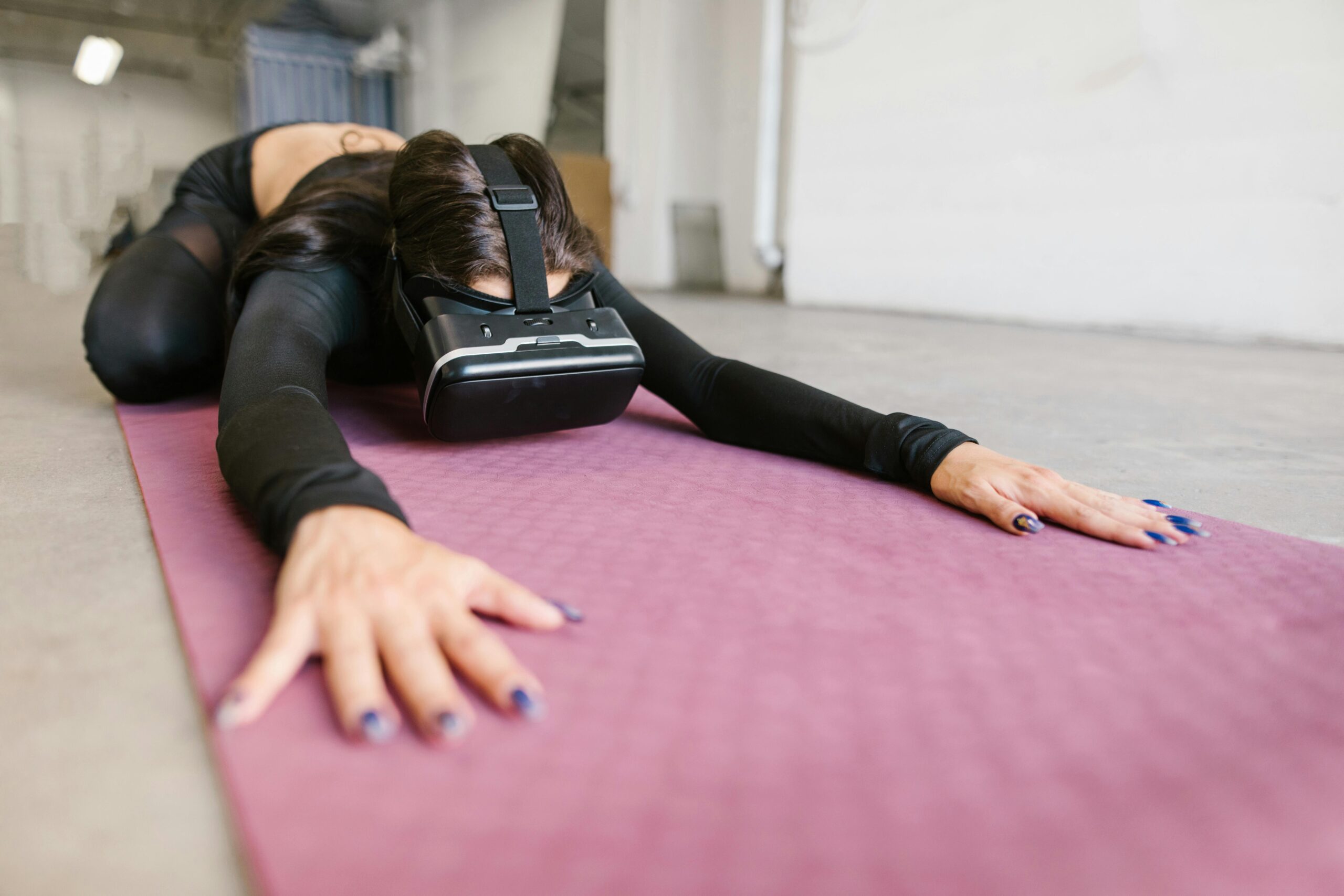
Virtual reality combined with AI creates immersive meditation environments that respond dynamically to your mental state. Imagine meditating in a forest where the wind speed adjusts based on your breathing rate, or where visual complexity decreases as you achieve deeper focus, minimizing potential distractions.
AI-powered VR meditation can transport you to locations scientifically proven to induce calm—mountain peaks, ocean shores, ancient temples—while subtly optimizing every sensory element based on your real-time biometric feedback. The environment becomes an extension of your nervous system, supporting your journey toward tranquility.
For practitioners who struggle with traditional sitting meditation, VR offers engaging alternatives like walking meditations through generated landscapes or movement-based practices that track body position. The AI ensures these activities maintain meditative qualities rather than becoming mere entertainment.
🤖 AI Meditation Coaches and Conversational Guidance
Natural language processing has enabled AI meditation coaches that engage in meaningful dialogue about your practice. These chatbots can answer questions about technique, provide encouragement during difficult periods, and offer personalized advice based on comprehensive analysis of your meditation history.
Unlike human teachers limited by time and availability, AI coaches are accessible 24/7, providing support whenever you need it. They remember every detail of your practice journey, recognizing patterns and progress that would be impossible for human memory to track across hundreds of sessions.
The most advanced systems incorporate emotional intelligence, detecting frustration, discouragement, or overconfidence in your messages and responding with appropriate support. They celebrate milestones with you and offer perspective during plateaus, maintaining motivation through the inevitable ups and downs of meditation practice.
⚡ Overcoming Common Obstacles With Intelligent Assistance
Most people abandon meditation due to specific challenges: difficulty quieting mental chatter, physical discomfort, lack of perceived progress, or inability to maintain consistency. AI addresses each obstacle with targeted interventions based on pattern recognition in your practice data.
When the system detects you frequently terminate sessions early due to restlessness, it might introduce micro-adjustments to session structure, adding gentle movement breaks or varying guidance density. If you struggle with consistency, machine learning algorithms identify your most reliable practice triggers and recommend habit-stacking strategies personalized to your lifestyle patterns.
For the common challenge of mental wandering, AI can provide more frequent attention anchors during periods when your biometrics indicate drift, gradually reducing support as your concentration strengthens. This scaffolded approach prevents both the frustration of insufficient guidance and the dependency created by excessive hand-holding.
🌟 The Future of AI-Assisted Consciousness Exploration
We stand at the beginning of an extraordinary era where technology and consciousness practices merge. Future developments will likely include direct neural interfaces that provide even more precise meditation guidance, AI systems that facilitate group meditations with synchronized brainwave entrainment across participants, and perhaps even machines that can induce specific conscious states on demand.
Ethical considerations accompany these advances. Will technology-dependent meditation create authentic spiritual growth, or merely simulate it? How do we preserve the wisdom traditions that developed over millennia while embracing modern innovations? These questions deserve ongoing consideration as AI capabilities expand.
What remains certain is that AI has democratized access to sophisticated meditation guidance previously available only to those with resources for extensive retreats or personal teachers. Anyone with a smartphone can now receive personalized instruction rivaling what monastics receive, fundamentally transforming humanity’s relationship with contemplative practice.
🎭 Balancing Technology and Authentic Practice
While AI offers remarkable tools for deepening meditation, technology should serve practice rather than dominate it. The ultimate goal remains developing your intrinsic capacity for awareness and tranquility, not becoming dependent on external devices for inner peace.
Effective use of AI meditation tools involves periodic “unplugged” sessions where you practice without assistance, integrating skills developed with technological support. Think of AI as training wheels that help you learn to balance, not as a permanent crutch preventing you from riding independently.
The most profound meditative insights often arise in silence, away from all stimulation including helpful technology. AI-enhanced practice should build capacity that ultimately allows you to access deep states anywhere, anytime, regardless of available tools. Technology illuminates the path, but you must still walk it yourself.
💡 Implementing AI Meditation in Daily Life
Beginning an AI-enhanced meditation practice requires no special expertise. Start with established platforms that offer free trials, allowing you to explore different approaches without financial commitment. Experiment with various AI features—biofeedback, personalized guidance, progress tracking—discovering which resonate with your preferences and goals.
Consistency matters more than session length when establishing a meditation habit. AI systems excel at supporting daily practice through intelligent reminders timed to your availability patterns and motivational nudges calibrated to your psychological profile. Even five minutes daily, practiced consistently with AI optimization, produces measurable benefits within weeks.
As your practice deepens, gradually explore advanced features like brainwave monitoring or VR environments. Allow the AI to guide your progression, trusting its analysis of your readiness for more sophisticated techniques. The technology serves as both teacher and training partner, supporting your journey toward sustained tranquility and flow.
The ancient practice of meditation has found a powerful ally in modern artificial intelligence. By harnessing machine learning, biofeedback, and personalization algorithms, we can now access states of deep meditative flow with unprecedented reliability and speed. Technology and tranquility, once seen as opposites, are merging to create transformative practices that honor timeless wisdom while embracing contemporary innovation. Whether you’re a complete beginner or an experienced practitioner, AI-enhanced meditation offers pathways to peace specifically designed for your unique mind, making genuine tranquility accessible in our chaotic modern world.