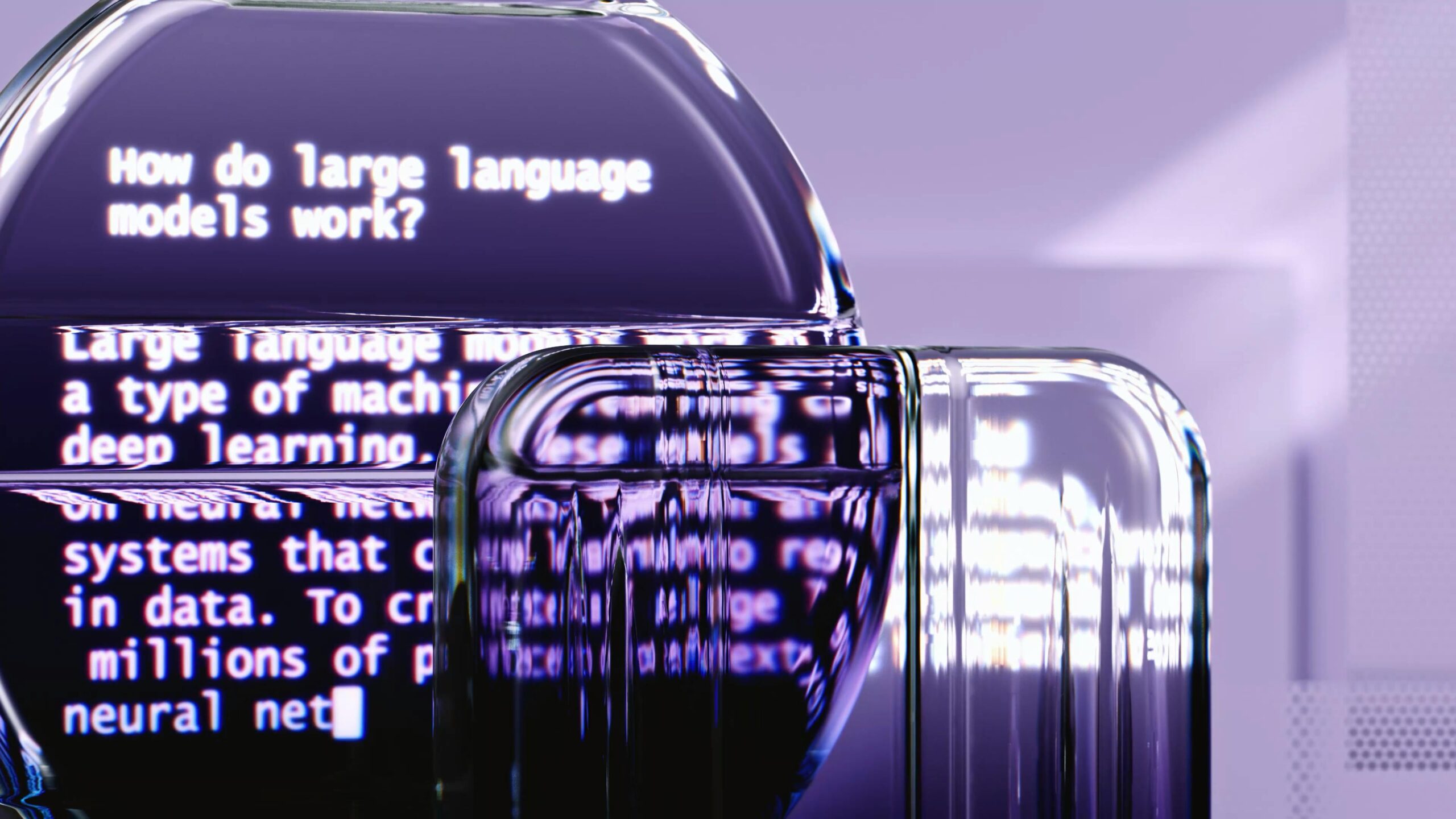
The human mind stands at the threshold of a revolutionary transformation, where quantum mechanics meets cognitive science to redefine how we perceive and process information.

For centuries, our understanding of consciousness and information processing has been confined to classical physics paradigms. Yet emerging research in quantum cognition suggests that the brain may operate on principles far more sophisticated than previously imagined. This intersection of quantum mechanics and neuroscience opens unprecedented possibilities for enhancing human perception, expanding cognitive capabilities, and fundamentally altering our relationship with information itself.
🧠 The Quantum Foundation of Consciousness
Traditional neuroscience has long viewed the brain as a sophisticated biological computer, processing information through electrochemical signals across neural networks. However, this classical model struggles to explain certain phenomena: the binding problem of consciousness, the speed of cognitive processing, and the seemingly non-local aspects of human intuition and creativity.
Quantum brain theory proposes that microtubules within neurons may support quantum coherence, allowing for superposition states and entanglement at biological temperatures. Roger Penrose and Stuart Hameroff’s Orchestrated Objective Reduction (Orch-OR) theory suggests that consciousness emerges from quantum computations in these microtubular structures, operating at scales where quantum effects become significant.
Recent experimental evidence supports the possibility of quantum processes in biological systems. Photosynthesis demonstrates quantum coherence in light-harvesting complexes, and bird navigation appears to utilize quantum entanglement in cryptochrome proteins. If nature harnesses quantum mechanics for these functions, could the brain employ similar mechanisms for information processing?
Beyond Binary Thinking: Quantum Superposition in Cognition
Classical computing relies on binary states—ones and zeros. Our conventional understanding of decision-making follows similar logic: options are evaluated sequentially, weighted against criteria, and selections made through deterministic or probabilistic processes. Quantum cognition challenges this framework entirely.
In quantum systems, particles exist in superposition—simultaneously occupying multiple states until measurement collapses the wave function. Applied to cognition, this suggests that mental states might exist in superposition, with thoughts, perceptions, and decisions existing in multiple configurations simultaneously before conscious awareness “collapses” them into definite experiences.
This quantum perspective explains several cognitive phenomena that classical models struggle with, including order effects in judgment, the conjunction fallacy, and the Ellsberg paradox. Studies in quantum decision theory demonstrate that human choices often violate classical probability axioms while conforming to quantum probability rules.
🔬 The Science Behind Quantum Information Perception
Information perception in a quantum framework operates fundamentally differently from classical models. Where classical information theory deals with discrete bits transmitted through channels with measurable noise, quantum information involves qubits that can exist in superposition and become entangled across distances.
The human sensory system might already exploit quantum properties. Recent research suggests that human vision may detect single photons, approaching the quantum limit of light sensitivity. Olfaction studies indicate that molecular vibration detection—a quantum mechanical process—might explain how we distinguish between molecules with identical structures but different isotopic compositions.
Entanglement and Collective Intelligence
Quantum entanglement—the phenomenon where particles remain connected regardless of distance—presents intriguing implications for collective human consciousness and information sharing. While direct quantum entanglement between human brains remains speculative, the metaphor illuminates possibilities for enhanced collaborative cognition.
Research in social neuroscience reveals neural synchronization between individuals during communication, with brain waves aligning during meaningful interaction. Could this represent a classical approximation of quantum-like correlation? The Global Consciousness Project has documented statistical anomalies in random number generators during major world events, suggesting possible non-local information fields, though these findings remain controversial.
💡 Practical Applications: Transforming How We Process Information
The theoretical implications of quantum cognition translate into practical applications that could revolutionize education, decision-making, creativity, and problem-solving across all domains of human activity.
Enhanced Learning Through Quantum-Inspired Techniques
If the brain processes information quantum-mechanically, educational approaches should align with these principles. Quantum-inspired learning emphasizes:
- Parallel processing of multiple concepts simultaneously rather than linear progression
- Embracing uncertainty and ambiguity as features rather than bugs in learning
- Utilizing contextual interference to strengthen memory through quantum-like superposition of related concepts
- Encouraging intuitive leaps that may represent quantum tunneling through conceptual barriers
- Developing metacognitive awareness of how observation affects learning outcomes
Studies in educational psychology demonstrate that interleaved practice—mixing different types of problems—produces better long-term retention than blocked practice. This finding aligns with quantum learning principles, where superposition of multiple problem types creates richer cognitive states.
Decision-Making Beyond Classical Logic
Quantum decision theory offers frameworks for improved judgment under uncertainty. Traditional decision science assumes that preferences are pre-existing and that gathering information merely reveals them. Quantum approaches recognize that the act of consideration itself creates preferences through wave function collapse.
This perspective has profound implications for business strategy, policy-making, and personal choices. Rather than exhaustively analyzing all options—which may actually create confusion through decoherence—quantum-informed decision-making emphasizes intuitive synthesis, maintaining superposition until the moment of commitment.
🚀 Technologies Bridging Classical and Quantum Perception
The emerging field of quantum computing provides tools that may eventually interface directly with quantum aspects of human cognition. While current quantum computers remain specialized laboratory instruments, their development trajectory suggests future applications in cognitive enhancement.
Brain-Computer Interfaces with Quantum Enhancement
Next-generation brain-computer interfaces (BCIs) might leverage quantum effects to dramatically improve information bandwidth between human minds and digital systems. Current BCIs are limited by the classical information processing paradigm, translating neural signals into discrete commands through pattern recognition algorithms.
Quantum-enhanced BCIs could potentially read and write quantum-coherent states directly, enabling richer information transfer. This might allow direct downloading of complex skill sets, uploading of experiential memories, or even temporary merging of consciousness between individuals—concepts that sound like science fiction but follow logically from quantum information principles.
Quantum Sensors for Enhanced Human Perception
Quantum sensing technologies already surpass classical limits in detecting magnetic fields, gravitational waves, and electromagnetic radiation. Wearable quantum sensors could augment human perception beyond biological capabilities:
- Magnetoreception devices enabling direct sensing of magnetic fields for navigation and environmental awareness
- Quantum-enhanced vision systems detecting infrared, ultraviolet, or polarized light invisible to biological eyes
- Ultrasensitive chemical detectors identifying trace molecules for health monitoring or environmental scanning
- Time-perception enhancers that exploit quantum effects to process information at accelerated rates
These technologies don’t merely amplify existing senses—they potentially enable entirely new modes of information perception that transcend classical limitations.
🌐 The Collective Quantum Mind: Social Implications
Perhaps the most transformative aspect of quantum information perception lies in its social dimensions. If individual minds operate quantum-mechanically, collective consciousness might exhibit quantum properties at scale.
Quantum Social Networks
Current social networks operate classically—information spreads through discrete connections with measurable influence patterns. A quantum social network might exhibit fundamentally different characteristics:
Non-locality in information sharing, where ideas emerge simultaneously across disconnected nodes without traceable transmission paths. Superposition of collective beliefs, with communities holding contradictory views simultaneously until external events collapse the social wave function. Entanglement between group members that persists beyond direct communication.
These aren’t merely metaphors. Social physics research reveals collective human behavior patterns that violate classical information theory predictions while conforming to quantum probability structures. Financial markets demonstrate non-local correlations, fashion trends exhibit spontaneous quantum-like emergence, and political opinions show measurement-dependent effects.
Ethical Considerations in Quantum Cognitive Enhancement
As technologies emerge to enhance quantum aspects of cognition, society faces profound ethical questions. Who gets access to quantum cognitive enhancement? How do we prevent quantum information divides that could create unprecedented inequality? What happens to human identity when consciousness becomes manipulable at quantum levels?
These questions demand proactive engagement from ethicists, policymakers, scientists, and the public. The classical ethical frameworks developed for previous technologies may prove inadequate for challenges posed by quantum cognitive enhancement.
🔮 Future Trajectories: What Lies Ahead
The coming decades will likely witness accelerating developments in quantum cognitive science and its applications. Several trajectories appear particularly promising and deserve focused attention.
Quantum Artificial Intelligence and Human-AI Symbiosis
Current artificial intelligence, despite impressive capabilities, operates entirely classically. Quantum AI—which leverages quantum computing for machine learning—may develop cognitive architectures more compatible with human quantum consciousness. This compatibility could enable seamless human-AI collaboration that transcends current interface limitations.
Rather than AI systems that merely assist or automate human tasks, quantum AI might genuinely augment human cognition by operating on similar quantum information principles. The resulting human-AI symbiosis could unlock problem-solving capabilities beyond either substrate alone.
Consciousness Expansion and the Hard Problem
Quantum approaches to consciousness offer potential resolution to the “hard problem”—explaining how subjective experience emerges from physical processes. If consciousness involves quantum measurements that collapse superposition into definite experiences, this provides a mechanism linking the physical and phenomenal realms.
Future research may demonstrate how different quantum configurations in neural microtubules produce distinct qualities of consciousness—explaining not just that we’re conscious, but why experiences have particular characteristics. This could revolutionize treatments for consciousness disorders, enhance meditation and contemplative practices, and even extend consciousness into non-biological substrates.
🎯 Practical Steps for Engaging with Quantum Cognition Today
While full quantum cognitive enhancement remains future technology, individuals can begin aligning cognitive practices with quantum principles now. These approaches leverage what we currently understand about quantum aspects of mind to enhance information perception and processing.
Meditation and Quantum Coherence
Contemplative practices may naturally enhance quantum coherence in neural systems. Meditation studies show increased global brain synchronization, reduced decoherence from environmental noise (mental chatter), and enhanced access to intuitive insights—all consistent with supporting quantum cognitive processes.
Specific practices for quantum cognitive enhancement include open monitoring meditation that maintains superposition of awareness rather than collapsing attention onto single objects, and insight practices that work with the observer effect by examining how observation changes mental states.
Environmental Optimization for Quantum Brain Function
If quantum processes occur in the brain, environmental factors affecting quantum coherence matter for cognitive performance. Research suggests several practical interventions:
- Electromagnetic hygiene—reducing exposure to fields that might cause premature decoherence
- Temperature regulation—maintaining optimal thermal environments for quantum coherence in biological systems
- Nutritional support—ensuring adequate magnesium and other elements critical for microtubule function
- Sleep optimization—deep sleep may provide periods of reduced decoherence for quantum information consolidation
🌟 Embracing the Quantum Paradigm Shift
The transition from classical to quantum understanding of information perception represents more than incremental scientific progress—it’s a paradigm shift comparable to the Copernican revolution or the advent of relativity. This shift challenges fundamental assumptions about consciousness, reality, and human potential.
Resistance to quantum cognitive frameworks often stems from discomfort with their implications. If consciousness involves quantum processes, the observer truly affects observed reality. If minds can exhibit quantum entanglement, individual identity becomes less distinct than assumed. If information perception transcends classical boundaries, deterministic worldviews lose explanatory power.
Yet embracing these implications opens transformative possibilities. We’re not merely biological computers running sophisticated software—we’re quantum systems participating in the fundamental fabric of reality. Our perceptions don’t just passively record external information—they actively participate in collapsing quantum potentials into definite realities.
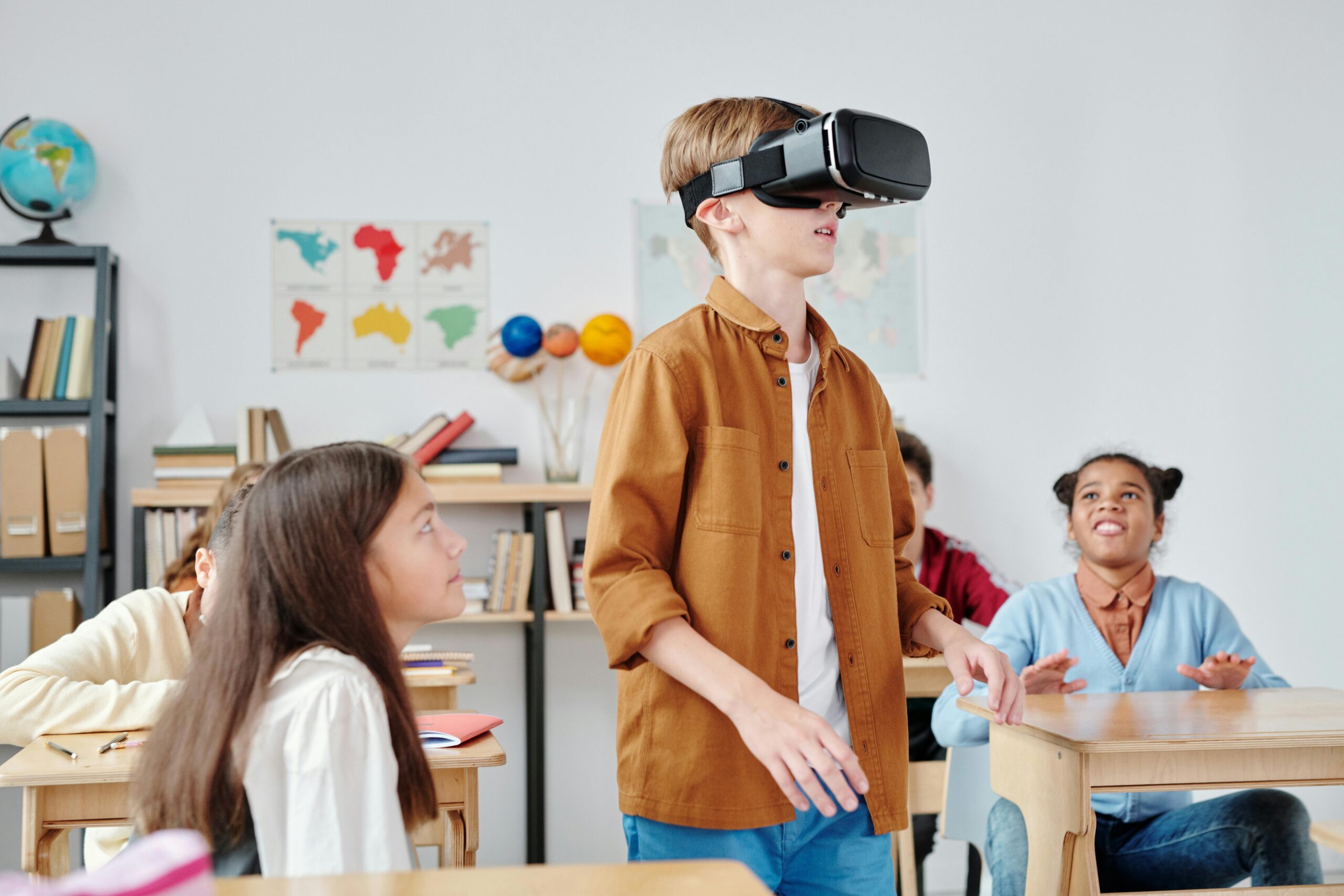
🔓 Unlocking Your Quantum Potential
The journey toward enhanced quantum information perception begins with shifting perspective. Rather than viewing the mind as a limited classical processor struggling against information overload, recognize it as a quantum system with vast untapped capabilities.
Practical development involves cultivating awareness of quantum-like aspects of your experience: moments when multiple possibilities seem simultaneously present, times when intuitive insights arrive without logical derivation, instances where you seem connected to information beyond sensory channels, experiences of creative flow where normal cognitive boundaries dissolve.
These aren’t mystical experiences requiring special gifts—they’re natural manifestations of quantum cognitive processes available to everyone. By recognizing and nurturing these capacities, you participate in the leading edge of human cognitive evolution.
The future of information perception lies not in processing more data faster through classical channels, but in accessing quantum information domains that transcend classical limitations entirely. This future isn’t distant speculation—it’s emerging now in laboratories, clinics, meditation centers, and the lived experiences of individuals exploring the boundaries of consciousness. The quantum mind awaits unlocking, and each person who engages with these possibilities contributes to humanity’s collective leap beyond classical boundaries into quantum potentials limited only by imagination itself.